

As a supplier of Toothed Blades, I've had the privilege of witnessing firsthand the pivotal role these blades play in various industries. The cutting speed of toothed blades is a crucial factor that directly impacts productivity, efficiency, and the overall quality of the cutting process. In this blog post, I'll delve into the key factors that influence the cutting speed of toothed blades, offering insights based on my years of experience in the field.
Blade Material
The material from which a toothed blade is made is one of the most significant factors affecting its cutting speed. Different materials possess distinct properties that determine their hardness, wear resistance, and heat resistance.
High - speed steel (HSS) is a popular choice for toothed blades. It offers good hardness and can maintain its cutting edge at relatively high temperatures. HSS blades are suitable for cutting a wide range of materials, including metals, plastics, and wood. However, compared to some other materials, their cutting speed might be limited when dealing with extremely hard or abrasive materials.
Carbide - tipped blades are another option. Carbide is an extremely hard material, and blades with carbide tips can cut through tough materials much faster than HSS blades. They are commonly used in applications where high - speed cutting of hard metals, such as stainless steel or titanium, is required. The wear resistance of carbide - tipped blades also means they can maintain their cutting speed over a longer period, reducing the need for frequent blade changes.
Diamond - coated blades are at the top end of the spectrum when it comes to cutting speed for certain materials. Diamond is the hardest known natural material, and diamond - coated toothed blades can cut through extremely hard and abrasive materials like ceramics and glass at remarkable speeds. However, they are also more expensive than HSS or carbide - tipped blades. For more information on high - performance cutting blades, you can visit Cutting Machine Blades.
Tooth Design
The design of the teeth on a toothed blade has a profound impact on its cutting speed. Several aspects of tooth design are critical:
Tooth shape is an important consideration. Different tooth shapes are optimized for different cutting applications. For example, a trapezoidal tooth shape is often used for general - purpose cutting. It provides a good balance between cutting efficiency and chip removal. A hook - shaped tooth, on the other hand, is designed for faster cutting, especially in softer materials. The hook angle helps to pull the material into the blade, increasing the cutting speed.
Tooth pitch also plays a role. The tooth pitch refers to the distance between adjacent teeth. A fine - pitched blade (with a smaller distance between teeth) is suitable for cutting thin materials or materials that require a smooth finish. However, a coarse - pitched blade (with a larger distance between teeth) can remove more material per revolution, resulting in a faster cutting speed when cutting thicker materials.
Tooth rake angle affects the cutting force and chip formation. A positive rake angle reduces the cutting force required, which can increase the cutting speed. However, too large a positive rake angle may cause the teeth to wear out more quickly. A negative rake angle, on the contrary, provides more strength to the teeth, making them suitable for cutting hard materials, but it may also reduce the cutting speed slightly.
Cutting Conditions
The cutting conditions under which a toothed blade operates can significantly influence its cutting speed.

The type of material being cut is a primary factor. Soft materials like wood or plastics can generally be cut at higher speeds than hard metals. For instance, a toothed blade can cut through a piece of pine wood much faster than it can cut through a block of hardened steel. The density, hardness, and brittleness of the material all affect the cutting speed.
The feed rate, which is the speed at which the material is fed into the blade, also impacts the cutting speed. A higher feed rate can increase the overall cutting speed, but it must be balanced with the blade's ability to handle the load. If the feed rate is too high, the blade may become overloaded, leading to premature wear or even breakage.
The cutting depth, or the thickness of the material being cut in a single pass, is another important consideration. A shallower cutting depth usually allows for a higher cutting speed, as the blade has to remove less material at once. However, in some cases, a deeper cutting depth may be required to complete the cutting operation in fewer passes, but this often means a lower cutting speed to ensure the blade can handle the load.
Machine Compatibility
The machine on which the toothed blade is used must be compatible with the blade to achieve optimal cutting speed.
The power of the machine is crucial. A machine with insufficient power will not be able to drive the blade at its maximum cutting speed. For example, if a small, low - power saw is used with a large, high - performance toothed blade, the machine may struggle to turn the blade fast enough, resulting in a slower cutting speed.
The spindle speed of the machine, which determines how fast the blade rotates, must be set correctly. Different blades are designed to operate at specific spindle speeds. If the spindle speed is too low, the cutting speed will be limited. Conversely, if the spindle speed is too high, the blade may overheat, leading to premature wear or damage.
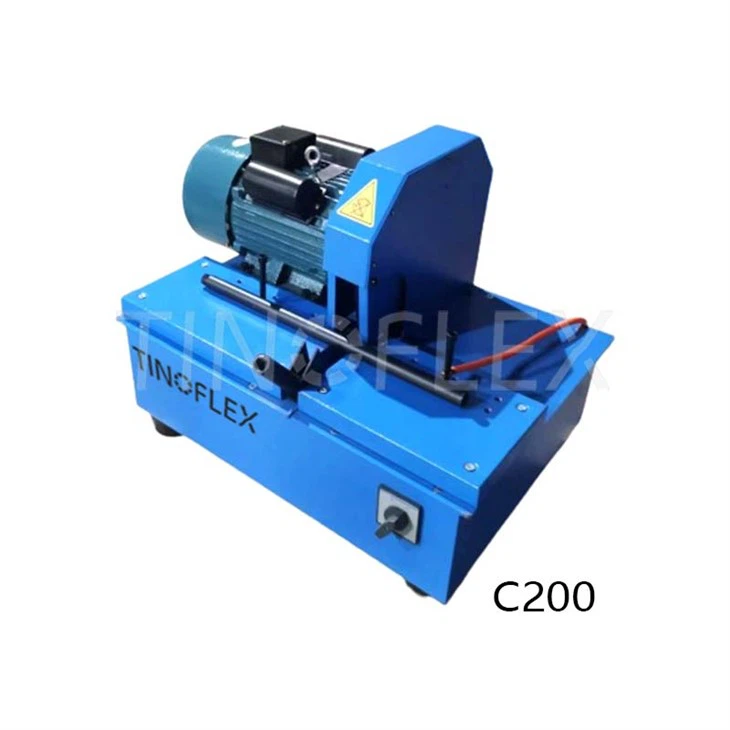
The stability of the machine is also important. A stable machine ensures that the blade cuts smoothly and consistently. Vibration in the machine can cause the blade to cut unevenly, reducing the cutting speed and the quality of the cut. For more details on suitable cutting machines, you can check out Hose Cutting Saw.
Maintenance and Sharpening
Proper maintenance and sharpening of toothed blades are essential for maintaining their cutting speed.
Over time, the teeth of a toothed blade will wear down. A dull blade will cut more slowly and may produce a poor - quality cut. Regular sharpening is necessary to keep the blade's cutting edges sharp. Sharpening restores the blade's ability to cut through materials quickly and efficiently.
Lubrication is also important. Using the right lubricant can reduce friction between the blade and the material being cut, which in turn increases the cutting speed. Lubrication also helps to dissipate heat, preventing the blade from overheating and extending its lifespan.
In addition, keeping the blade clean and free from debris is crucial. Accumulated debris on the blade can interfere with the cutting process, reducing the cutting speed. Regular cleaning of the blade ensures that it can operate at its optimal performance.
Conclusion
The cutting speed of toothed blades is influenced by a variety of factors, including blade material, tooth design, cutting conditions, machine compatibility, and maintenance. As a supplier of Toothed Blades, I understand the importance of these factors in helping our customers achieve the best results in their cutting applications.
If you're looking for high - quality toothed blades that offer excellent cutting speed and performance, we're here to assist you. Our team of experts can help you select the right blade for your specific needs, taking into account all the factors that influence cutting speed. Whether you're in the manufacturing, construction, or any other industry that requires precise and efficient cutting, we can provide you with the solutions you need. Contact us today to start a discussion about your cutting requirements and explore how our toothed blades can enhance your productivity.
References
- "Cutting Tool Engineering Handbook" by Peter Calvert
- "Machining Fundamentals" by John Black