

Hey there! As a supplier of Toothed Blades, I've seen firsthand the importance of understanding the different tooth profiles available. In this blog post, I'll break down the various types of tooth profiles for toothed blades, explain their unique features and applications, and help you choose the right one for your specific needs.
Straight Tooth Profile
The straight tooth profile is one of the most common and straightforward designs for toothed blades. As the name suggests, the teeth on these blades are straight and parallel to the blade's axis. This simple design makes straight tooth blades easy to manufacture and maintain.
One of the key advantages of straight tooth blades is their ability to provide a clean, precise cut. The straight teeth create a consistent cutting edge, which is ideal for applications where accuracy is crucial. For example, in woodworking, straight tooth blades are often used for cross-cutting and ripping lumber, as they can produce smooth, splinter-free cuts.
Another benefit of straight tooth blades is their versatility. They can be used to cut a wide range of materials, including wood, plastic, and soft metals. However, straight tooth blades may not be the best choice for cutting hard or dense materials, as they can dull quickly and require more frequent sharpening.
Raker Tooth Profile
The raker tooth profile is similar to the straight tooth profile, but with an additional "raker" tooth between each pair of cutting teeth. The raker tooth is slightly shorter than the cutting teeth and is designed to remove the material that is being cut, preventing it from clogging the blade.
One of the main advantages of raker tooth blades is their ability to cut through thick or dense materials more efficiently. The raker teeth help to clear the chips and debris from the cutting path, reducing the amount of friction and heat generated during the cutting process. This can result in a smoother, faster cut and less wear on the blade.
Raker tooth blades are commonly used in applications such as sawing through thick logs, cutting through metal pipes, and trimming thick plastic sheets. However, like straight tooth blades, raker tooth blades may not be the best choice for cutting very thin or delicate materials, as the raker teeth can cause the material to splinter or tear.
Hook Tooth Profile
The hook tooth profile is characterized by teeth that are angled forward, creating a "hook" shape. This design allows the blade to grip the material being cut more firmly, making it ideal for applications where a fast, aggressive cut is required.
One of the key advantages of hook tooth blades is their ability to cut through tough, fibrous materials, such as hardwood, bamboo, and fiberglass. The forward-angled teeth help to pull the material into the blade, increasing the cutting speed and efficiency. Hook tooth blades are also commonly used in applications where a smooth finish is not required, such as rough cutting lumber or trimming branches.
However, hook tooth blades can be more aggressive than other types of tooth profiles, which can make them more difficult to control. They may also cause more splintering and tear-out in the material being cut, especially if the blade is not sharp or if the cutting speed is too high.
Alternate Top Bevel (ATB) Tooth Profile
The Alternate Top Bevel (ATB) tooth profile is a popular choice for many cutting applications. This profile features teeth that are beveled alternately to the left and right, creating a shearing action when the blade cuts through the material.
One of the main advantages of ATB tooth blades is their ability to provide a clean, smooth cut with minimal splintering. The shearing action of the beveled teeth helps to slice through the material, rather than tearing it, which results in a finer finish. ATB tooth blades are commonly used in woodworking applications, such as cabinet making, furniture building, and fine carpentry.
ATB tooth blades are also relatively versatile and can be used to cut a variety of materials, including wood, plywood, and composite materials. However, they may not be the best choice for cutting very hard or dense materials, as the beveled teeth can wear down more quickly.
Triple Chip Grind (TCG) Tooth Profile
The Triple Chip Grind (TCG) tooth profile is a specialized design that is commonly used for cutting hard, abrasive materials, such as laminate, tile, and non-ferrous metals. This profile features teeth that have a chamfered tip, a flat top, and a beveled edge, creating a three-point cutting edge.
One of the key advantages of TCG tooth blades is their ability to withstand the high levels of friction and heat generated when cutting hard materials. The chamfered tip helps to reduce the amount of material that the blade has to cut through, while the flat top and beveled edge provide a sharp, durable cutting surface. TCG tooth blades are also less likely to chip or break when cutting through hard materials, making them a reliable choice for demanding applications.
However, TCG tooth blades may not be the best choice for cutting soft materials, as the three-point cutting edge can cause the material to splinter or tear. They are also typically more expensive than other types of tooth profiles, due to the more complex manufacturing process.
Choosing the Right Tooth Profile
Now that you have a better understanding of the different tooth profiles available for toothed blades, how do you choose the right one for your specific needs? Here are some factors to consider:
- Material to be cut: Different tooth profiles are better suited for cutting different types of materials. For example, straight tooth blades are ideal for cutting soft materials, while TCG tooth blades are better for cutting hard, abrasive materials.
- Cutting application: The type of cutting application you will be using the blade for will also influence your choice of tooth profile. For example, if you need to make a fast, aggressive cut, a hook tooth blade may be the best choice. If you need a clean, smooth cut, an ATB tooth blade may be more appropriate.
- Desired finish: The finish you want to achieve on the material being cut is another important consideration. If you need a fine, smooth finish, an ATB or straight tooth blade may be the best choice. If a rough finish is acceptable, a hook or raker tooth blade may be more suitable.
- Blade speed and feed rate: The speed and feed rate at which you will be using the blade can also affect the performance of the tooth profile. For example, a hook tooth blade may require a slower feed rate to prevent splintering and tear-out.
Conclusion
In conclusion, understanding the different tooth profiles of toothed blades is essential for choosing the right blade for your specific cutting needs. Whether you're a professional woodworker, a metal fabricator, or a DIY enthusiast, having the right blade can make all the difference in the quality and efficiency of your work.
If you're in the market for high-quality Toothed Blades, be sure to check out our selection at Toothed Blades. We offer a wide range of tooth profiles and blade sizes to suit your needs, and our team of experts is always available to help you choose the right blade for your application.

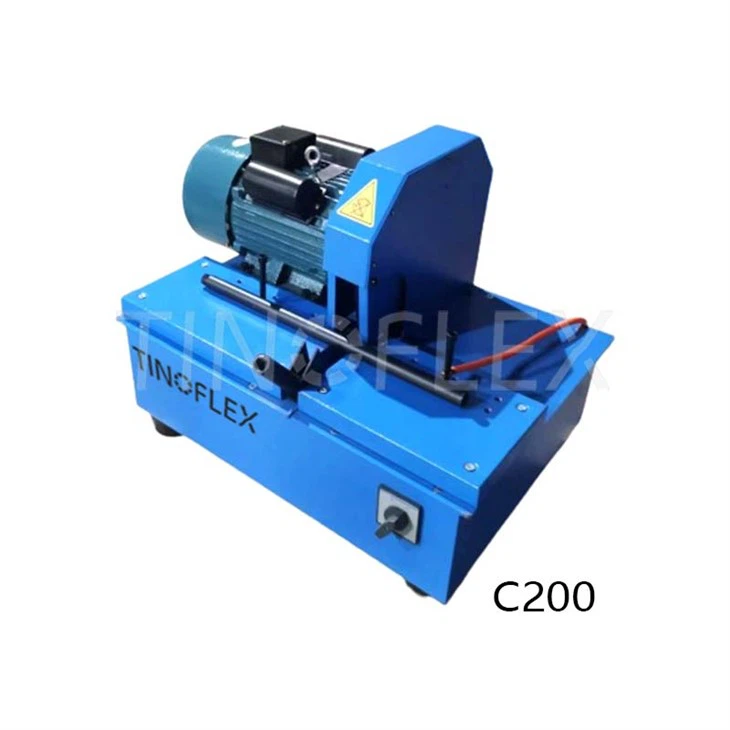
And if you're looking for a specialized blade for cutting hoses, be sure to check out our Hose Cutting Saw. This powerful saw is designed to make clean, precise cuts through a variety of hose materials, and it comes with a range of features to ensure easy operation and maximum efficiency.
We also offer a comprehensive selection of Cutting Machine Blades for a variety of industrial cutting applications. Our blades are made from high-quality materials and are designed to provide long-lasting performance and reliability.
If you have any questions or need further assistance in choosing the right blade for your needs, please don't hesitate to contact us. We're here to help you find the perfect solution for your cutting requirements.
References
- Woodworking Machinery and Tools: A Comprehensive Guide
- Metal Cutting and Machining Handbook
- Saw Blades: Selection, Use, and Maintenance