

As a seasoned supplier of Hose Cutting Machines, I've witnessed firsthand the diverse challenges presented by hoses of varying hardness levels. The ability of our machines to handle these differences is not just a technical feat but a testament to our commitment to providing versatile and efficient solutions for our clients.
Understanding Hose Hardness
Hose hardness is typically measured on the Shore scale, which categorizes materials based on their resistance to indentation. Soft hoses, with a lower Shore hardness rating, are often more flexible and pliable. They are commonly used in applications where a high degree of movement is required, such as in some medical devices or certain types of industrial hoses for fluid transfer in tight spaces. On the other hand, hard hoses, with a higher Shore hardness rating, are more rigid and durable. They are frequently employed in high - pressure applications, like hydraulic systems in heavy machinery.
Challenges Posed by Different Hardness Levels
Each hardness level brings its own set of challenges when it comes to cutting. Soft hoses are prone to deformation during the cutting process. While attempting to cut a soft hose, there is a risk of the blade compressing or stretching the hose material, resulting in an uneven cut. This can lead to issues such as leakage when the hose is assembled into a system.
Hard hoses, conversely, require more force to cut. The high hardness means that the cutting blade has to work against a greater resistance. If the cutting machine is not properly configured, the blade may dull quickly, leading to inefficient cutting and potentially damaging the hose itself. Additionally, hard hoses may crack or shatter if the cutting process is too abrupt or if the wrong cutting technique is used.
How Our Hose Cutting Machines Address These Challenges
Blade Selection
One of the key factors in handling hoses of different hardness levels is the selection of the appropriate blade. For soft hoses, we recommend using Cutting Machine Blades with a sharp, fine - edged design. These blades can make clean cuts without causing excessive deformation to the soft material. The fine edge allows for precise cutting, minimizing the risk of fraying or uneven edges.
For hard hoses, Toothed Blades are often the better choice. The teeth on these blades help to grip the hard material and break it down more effectively during the cutting process. The design of the teeth allows for a more aggressive cutting action, which is necessary to penetrate the tough surface of the hard hose.
Adjustable Cutting Force
Our Hose Cutting Machines are equipped with adjustable cutting force mechanisms. This feature allows operators to tailor the cutting force according to the hardness of the hose. When cutting a soft hose, a lower cutting force can be applied to prevent deformation. The machine can be set to apply just enough pressure to make a clean cut without compressing the hose.
For hard hoses, the cutting force can be increased. The adjustable mechanism ensures that the blade has enough power to cut through the tough material without over - stressing the machine or the blade. This adaptability is crucial in ensuring that hoses of all hardness levels can be cut accurately and efficiently.
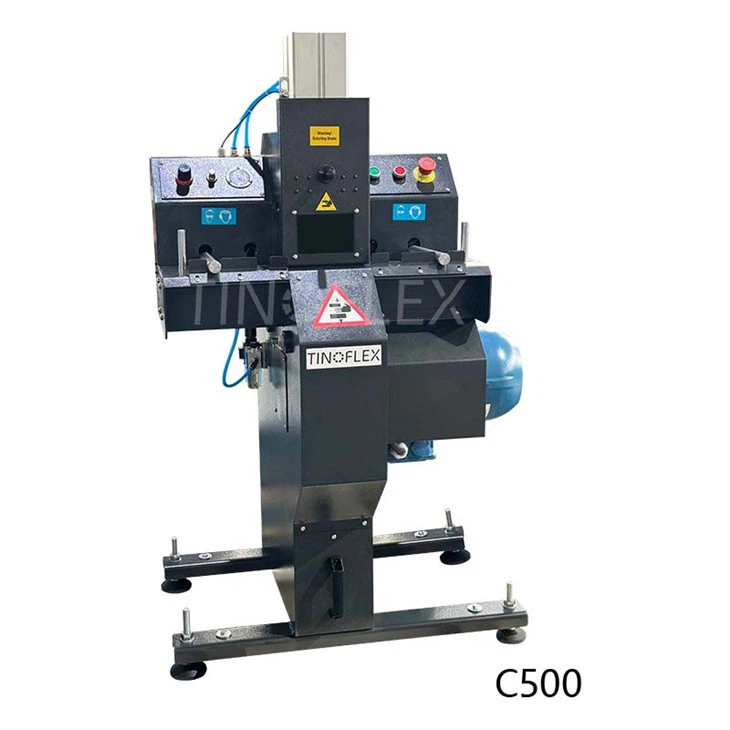

Precision Control Systems
In addition to blade selection and adjustable cutting force, our machines are equipped with precision control systems. These systems use advanced sensors to detect the hardness of the hose before the cutting process begins. Based on the detected hardness, the machine automatically adjusts the cutting parameters, such as the speed of the blade and the feed rate of the hose.
This level of automation not only improves the accuracy of the cut but also reduces the risk of human error. Operators can rely on the machine's intelligent control system to make the necessary adjustments, ensuring consistent and high - quality cuts across different hose hardness levels.
Case Studies
Let's take a look at a couple of real - world examples to illustrate how our Hose Cutting Machines handle hoses with different hardness levels.
In a hydraulic manufacturing plant, they were using hard hydraulic hoses for their heavy - duty equipment. The previous cutting method was causing the blades to wear out quickly, and the cuts were often uneven. After switching to our Hydraulic Hose Cutting Machine, which is specifically designed for hard hoses, they noticed a significant improvement. The toothed blades were able to cut through the hard hydraulic hoses cleanly and efficiently, reducing blade wear and improving the overall quality of the cuts.
On the other hand, a medical device manufacturer was using soft silicone hoses in their products. Their old cutting process was resulting in deformed hoses, which affected the functionality of their devices. Our machine, with its fine - edged blades and adjustable cutting force, was able to make precise cuts on the soft silicone hoses without causing any deformation. This led to an increase in the quality of their products and a reduction in production waste.
Conclusion
The ability of our Hose Cutting Machines to handle hoses with different hardness levels is a result of our continuous innovation and commitment to meeting the diverse needs of our customers. Through careful blade selection, adjustable cutting force, and precision control systems, we ensure that our machines can provide accurate and efficient cuts for hoses of all hardness levels.
If you are in the market for a reliable Hose Cutting Machine that can handle hoses with different hardness levels, we invite you to contact us for a detailed discussion. Our team of experts is ready to assist you in finding the perfect solution for your specific requirements.
References
- ASTM International. (2023). Standard Test Methods for Rubber Property - Durometer Hardness.
- ISO 4649:2020. Rubber - Determination of hardness.