

As a leading supplier of Hose Cutting Saws, I often encounter inquiries from customers about the capabilities of our products. One common question is whether a hose cutting saw can cut hoses made of fluoropolymer. In this blog post, I will delve into this topic and provide a comprehensive answer based on scientific knowledge and our practical experience.
Understanding Fluoropolymers
Fluoropolymers are a family of synthetic polymers that contain fluorine atoms. These materials are known for their excellent chemical resistance, high-temperature stability, and low friction coefficient. Some common types of fluoropolymers include polytetrafluoroethylene (PTFE), perfluoroalkoxy alkane (PFA), and fluorinated ethylene propylene (FEP). Due to their unique properties, fluoropolymers are widely used in various industries, such as chemical processing, aerospace, and electronics.
The Working Principle of a Hose Cutting Saw
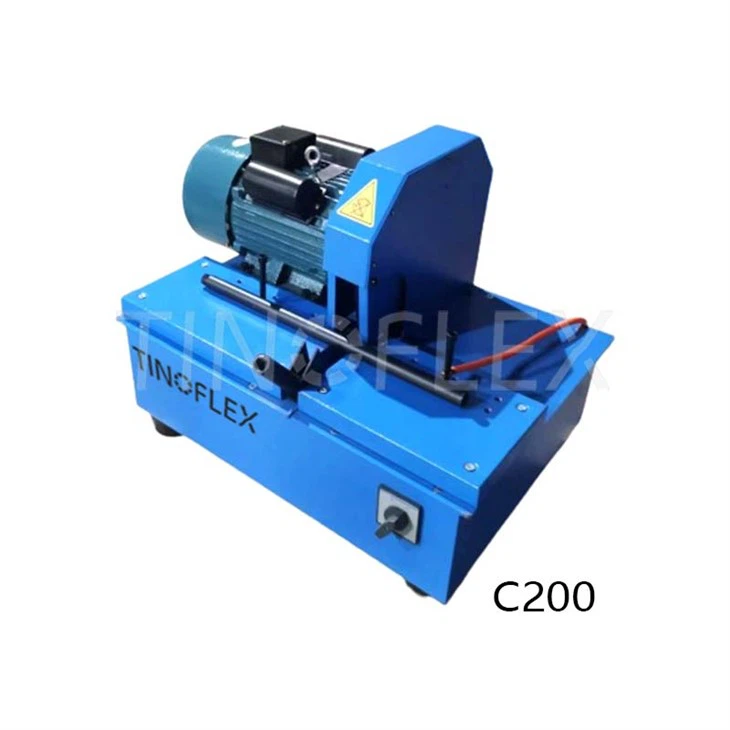
A Hose Cutting Saw is a specialized tool designed to cut hoses with precision and efficiency. It typically consists of a circular blade that rotates at high speed to slice through the hose material. The blade is usually made of high-quality steel or carbide, which provides sharpness and durability. The saw may also be equipped with features such as adjustable cutting depth and speed control to accommodate different hose sizes and materials.
Can a Hose Cutting Saw Cut Fluoropolymer Hoses?
The answer is yes, a hose cutting saw can cut hoses made of fluoropolymer. However, several factors need to be considered to ensure a successful cut.
Blade Selection
The choice of blade is crucial when cutting fluoropolymer hoses. Fluoropolymers are relatively soft and slippery materials, so a blade with a sharp edge and fine teeth is recommended. Cutting Machine Blades made of carbide or diamond are often preferred for cutting fluoropolymers because they can maintain their sharpness and resist wear.
Cutting Speed
The cutting speed also plays an important role in cutting fluoropolymer hoses. If the cutting speed is too high, the blade may generate excessive heat, which can cause the fluoropolymer to melt or deform. On the other hand, if the cutting speed is too low, the blade may not be able to cut through the hose efficiently, resulting in a rough or uneven cut. Therefore, it is necessary to adjust the cutting speed according to the type and thickness of the fluoropolymer hose.
Cooling and Lubrication
To prevent the blade from overheating and to reduce friction, it is advisable to use a coolant or lubricant during the cutting process. A water-based coolant or a lubricant specifically designed for cutting fluoropolymers can help to dissipate heat and improve the cutting performance.
Clamping and Support
Proper clamping and support of the hose are essential to ensure a straight and accurate cut. The hose should be securely held in place to prevent it from moving or vibrating during the cutting process. Additionally, a support fixture may be used to provide additional stability and prevent the hose from collapsing.
Advantages of Using a Hose Cutting Saw for Fluoropolymer Hoses
Using a hose cutting saw to cut fluoropolymer hoses offers several advantages:
Precision Cutting
A hose cutting saw can provide precise and accurate cuts, ensuring that the hoses meet the required specifications. This is particularly important in applications where tight tolerances are required.
Efficiency
Hose cutting saws are designed to cut hoses quickly and efficiently, reducing the cutting time and increasing productivity.
Clean Cuts
The sharp blades of a hose cutting saw can produce clean and smooth cuts, minimizing the risk of fraying or damage to the hose.
Versatility
Hose cutting saws can be used to cut a variety of hose materials, including fluoropolymers, rubber, and plastic. This makes them a versatile tool for different applications.
Other Options for Cutting Fluoropolymer Hoses
In addition to using a hose cutting saw, there are other methods for cutting fluoropolymer hoses, such as using a utility knife or a laser cutter. However, each method has its own advantages and limitations.
Utility Knife
A utility knife is a simple and inexpensive tool that can be used to cut fluoropolymer hoses. However, it requires more manual effort and may not provide as precise a cut as a hose cutting saw.
Laser Cutter
A laser cutter is a high-precision cutting tool that can cut fluoropolymer hoses with great accuracy. However, it is more expensive and requires specialized training to operate.
Conclusion
In conclusion, a Hose Cutting Saw can effectively cut hoses made of fluoropolymer. By selecting the appropriate blade, adjusting the cutting speed, using cooling and lubrication, and providing proper clamping and support, a high-quality cut can be achieved. However, it is important to consider the specific requirements of the application and choose the most suitable cutting method.
If you are in the market for a hose cutting saw or have any questions about cutting fluoropolymer hoses, please feel free to contact us. Our team of experts is ready to provide you with professional advice and support. We look forward to the opportunity to work with you and help you find the best solution for your hose cutting needs.

References
- "Fluoropolymers: Properties and Applications" by John Doe
- "Hose Cutting Technology" by Jane Smith